
MDAC Rules at Johor Bahru Causeway & Tuas Second Link
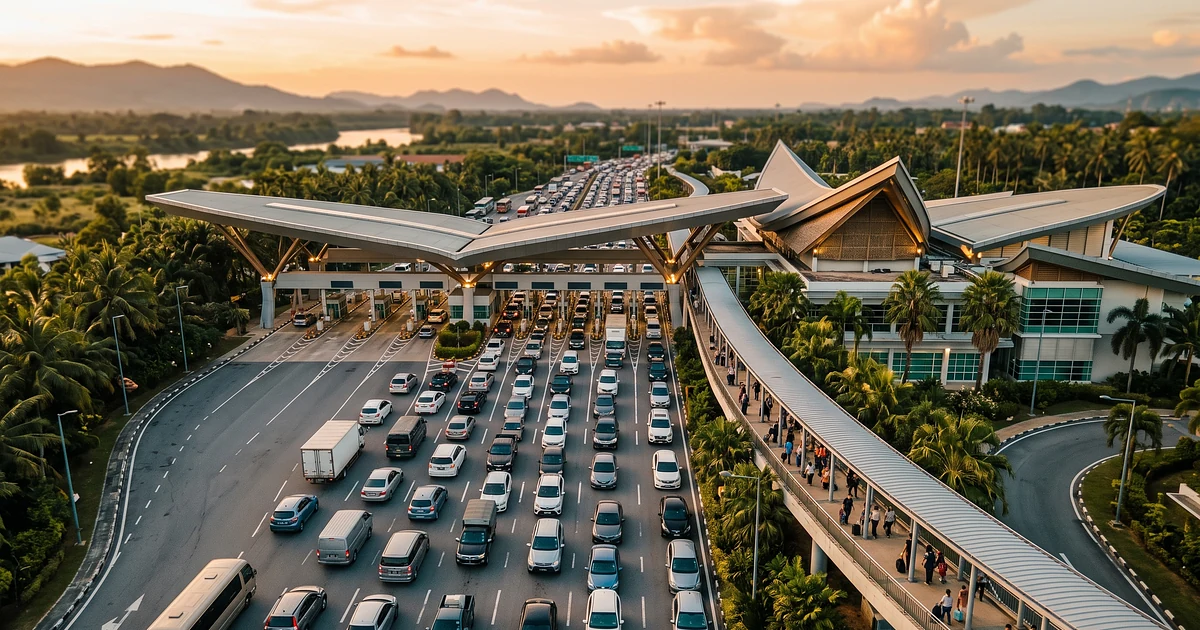
The Johor Bahru–Singapore Causeway and the Tuas Second Link together handle the highest daily cross-border traffic of any land border in the world. The MDAC rules here differ from every other entry point in Malaysia — here's exactly who needs one and who doesn't.
Key Facts at a Glance
- check_circleSingapore citizens crossing by land at the Causeway or Tuas Second Link are generally exempt from a standalone MDAC submission — their biometric passport data is handled through a separate bilateral clearance arrangement.
- check_circleThat land-border exemption does not extend to air or sea arrivals — Singapore citizens flying into KLIA, Penang, or arriving by ferry still need to submit an MDAC.
- check_circleSingapore Permanent Residents and long-term pass holders are not automatically covered by the citizen exemption and should verify their specific status.
- check_circleForeign nationals (third-country passport holders) crossing into Malaysia via JB or Tuas from Singapore still need a valid MDAC exactly as they would at any other entry point.
verified_userWho is exempt at these two crossings
Under current bilateral arrangements between Malaysia and Singapore, Singapore citizens using the automated immigration lanes at the Bangunan Sultan Iskandar (BSI) Causeway checkpoint or the Sultan Abu Bakar Complex (KSAB) at Tuas Second Link are not required to separately file an MDAC. Their passport is read biometrically at the automated gate, and arrival data is captured through that process instead of a pre-submitted digital form.
This is a land-border-specific exemption tied to the automated gate infrastructure at these two checkpoints — it does not apply the moment you change transport mode. A Singapore citizen who flies into KLIA, or arrives by ferry from Batam or elsewhere, is back to needing a standard MDAC submission within the usual 3-day window.
badgePermanent Residents, work-pass and long-term pass holders
The exemption described above is specific to Singapore citizenship, not Singapore residency. Singapore Permanent Residents who hold a foreign passport, or anyone crossing on an Employment Pass, S Pass, or Dependant's Pass tied to a non-Singaporean passport, should assume they need to submit an MDAC like any other foreign national unless they can confirm otherwise with JIM directly — the citizen-only exemption is not extended broadly.
directions_carVehicle Entry Permits and toll requirements
Separately from immigration paperwork, all foreign-registered private vehicles (cars) entering Peninsular Malaysia from Singapore must carry an active Vehicle Entry Permit (VEP) RFID tag, applied for in advance through the Malaysian VEP system. Motorcycles are currently exempt from the VEP RFID requirement, but riders still need a valid Touch 'n Go or road-charge card for toll clearance at both checkpoints.
None of this replaces or substitutes for MDAC requirements for any non-exempt passengers travelling in the vehicle — the VEP covers the vehicle, not the people inside it.
groupsIf you're not exempt: what to expect at JB and Tuas
Non-exempt travellers (most foreign nationals, and any Singapore PR/pass holder who hasn't confirmed exemption) should submit their MDAC online within the standard 3-day window before crossing, exactly as they would for an airport arrival — use our 3-day submission rule guide if you're unsure how to count your window. At the checkpoint, be prepared for significant queueing at peak commuter hours — early morning and evening rush periods can mean long waits purely due to traffic volume, independent of MDAC processing. If you'd rather fly instead, our KLIA entry point guide covers what airport arrival looks like by comparison.
Common mistake: assuming the land-border exemption applies to every nationality
The automated-gate exemption at JB and Tuas is specific to Singapore citizens. Travellers of other nationalities crossing from Singapore into Malaysia by land — including long-term Singapore residents holding a foreign passport — still need a standard MDAC submission, exactly as they would at KLIA.
Frequently Asked Questions
Do Singaporeans who commute daily across the Causeway need an MDAC every day?expand_more
Do I need an MDAC to cross from Malaysia into Singapore?expand_more
I'm a Singapore Permanent Resident with a foreign passport — do I need an MDAC?expand_more
I'm flying from a third country into Singapore, then crossing to Malaysia by land — do I need an MDAC?expand_more
Does a rented or Singapore-registered motorcycle need a Vehicle Entry Permit?expand_more
Which is busier, the Johor Bahru Causeway or the Tuas Second Link?expand_more
Related Resources
MDAC for Singapore Citizens
Full exemption rules plus requirements for PRs and pass holders.
Johor Bahru Causeway Guide
Queue times, counters, and what to expect at the BSI checkpoint.
Tuas Second Link Guide
Arrival walkthrough for the Sultan Abu Bakar Complex (KSAB).